Central America and the Caribbean
MontserratNestled in the heart of the Caribbean, Montserrat offers a unique blend of breathtaking natural beauty and rich cultural heritage, making it an enchanting destination for women seeking adventure and relaxation alike. Its volcanic landscape is complemented by lush rainforests and stunning beaches, inviting you to explore hidden trails and unwind in serene surroundings. The warm hospitality of the locals enhances the experience, as you savor traditional dishes infused with spicy flavors while listening to the rhythmic beats of calypso music. With its vibrant history, thriving arts scene, and captivating traditions, Montserrat beckons you to dive into its stories and create unforgettable memories in this Caribbean gem.

![Montserrat jpg [29 kB, 431 x 700] Caribbean, island in the Caribbean Sea, southeast of Puerto Rico](https://idyllic.travel/wp-content/uploads/2024/12/MH-locator-map-min.jpg "Montserrat jpg [29 kB, 431 x 700] Caribbean, island in the Caribbean Sea, southeast of Puerto Rico")
Comprehensive Travel Guide to Montserrat
General Information
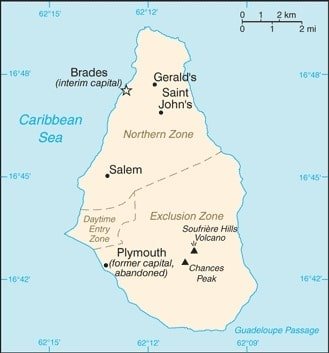
- Capital: Brades (de facto; Plymouth remains the official capital but is uninhabited due to volcanic activity)
- interim government buildings have been built at Brades Estate, the de facto capital, in the Carr's Bay/Little Bay vicinity at the northwest end of Montserrat
- Population: 5,468
- Currency: Eastern Caribbean Dollar (XCD)
- Time Zone: Atlantic Standard Time (AST), UTC -4
- Official Language: English
- Dialing Code: +664
- Driving Side: Left
Montserrat, often called the "Emerald Isle of the Caribbean," is known for its lush green landscapes, Irish heritage, and a dramatic history of volcanic activity. The Soufrière Hills Volcano and the resilient spirit of its people have shaped the island into a unique and fascinating destination.
Language and Communication
- Primary Language: English is the official and most widely spoken language.
- Helpful Phrases:
- Hello: Hello
- Thank You: Thank you
- Please: Please
Emergency Numbers
- Police: 999 or 911
- Fire: 999 or 911
- Ambulance: 999 or 911
Currency and Money
- Currency: Eastern Caribbean Dollar (XCD). US dollars are also widely accepted.
- ATMs: Limited but available in Brades and surrounding areas.
- Credit Cards: Accepted in hotels, restaurants, and major stores, though cash is recommended for smaller businesses.
- Currency Exchange: Available at banks or authorized exchange services.
Electricity and Plugs
- Voltage: 230 V
- Frequency: 60 Hz
- Plug Types: Type A and B (similar to the US).
- Adapter Needed: Yes, for travelers from regions using different plug types.
Safety and Health
Safety
- General Safety: Montserrat is one of the safest Caribbean islands with very low crime rates.
- Precautions:
- Adhere to restrictions in volcanic exclusion zones.
- Monitor weather conditions during hurricane season (June-November).
Health
- Vaccinations: Routine vaccinations are sufficient.
- Water Safety: Tap water is generally safe to drink, though bottled water is also available.
- Healthcare: Basic healthcare services are available. Travel insurance is recommended.
Transportation
Getting There
- Air Travel: Fly into John A. Osborne Airport (MNI) via regional flights from Antigua.
- Ferries: Ferry services connect Montserrat to Antigua.
Local Transport
- Taxis: Widely available; agree on a fare beforehand as meters are uncommon.
- Car Rentals: A good option for exploring the island. Visitors need a temporary driving license.
- Public Transport: Limited minibus services are available.
Activities and Attractions
Top Attractions
- Soufrière Hills Volcano and Plymouth:
- Visit the exclusion zone to witness the remnants of the former capital, Plymouth, buried under volcanic ash.
- Guided tours offer insights into the island’s volcanic history.
- Montserrat Volcano Observatory (MVO):
- Learn about volcanic activity and the ongoing monitoring of the Soufrière Hills Volcano.
- Rendezvous Bay:
- The island’s only white-sand beach, accessible by hiking or kayaking.
- Little Bay Beach:
- A serene spot perfect for swimming and snorkeling.
- Runaway Ghaut:
- A scenic hiking trail with historical significance. Legend says drinking its water ensures a return to Montserrat.
Nature and Outdoor Adventures
- Hiking Trails:
- Oriole Walkway Trail: Spot the rare Montserrat Oriole, the national bird.
- Silver Hills: Explore the island’s oldest volcanic region.
- Scuba Diving and Snorkeling:
- Explore coral reefs, shipwrecks, and underwater caves.
- Birdwatching:
- Montserrat is a haven for birdwatchers, with species like the Montserrat Oriole and the Forest Thrush.
Festivals and Events
- St. Patrick’s Festival (March):
- A week-long celebration blending Irish and African heritage with parades, music, and cultural performances.
- Montserrat Carnival (December-January):
- A vibrant festival featuring calypso competitions, street parades, and festive costumes.
- Calabash Festival (July):
- A cultural event showcasing local art, music, and cuisine.
Food and Cuisine
Must-Try Dishes
- Goat Water: A flavorful stew made with goat meat, local spices, and herbs.
- Saltfish and Johnny Cakes: A traditional Caribbean breakfast staple.
- Rice and Peas: A classic side dish made with coconut milk and beans.
- Seafood: Freshly caught fish, lobster, and conch are local favorites.
Dining Tips
- Tipping (10-15%) is appreciated in restaurants.
- Local eateries (locally called “rum shops”) offer affordable and authentic meals.
Shopping and Souvenirs
- Handicrafts: Items made from calabash and other local materials.
- Montserrat Stamps: A collector’s item due to their unique designs.
- Soufrière Hills Ash Products: Jewelry and art made with volcanic ash.
- Caribbean Rum: Locally distilled varieties make excellent gifts.
Best Time to Visit
- December to April: The dry season offers pleasant weather, ideal for outdoor activities.
- June to November: The rainy season; expect occasional tropical storms and lush landscapes.
Connectivity
- Wi-Fi: Available in most hotels, cafes, and restaurants.
- SIM Cards: Purchase from providers like FLOW or Digicel.
- Mobile Coverage: Reliable in most areas, though remote spots may have limited signal.
Suggested Itineraries
3-Day Itinerary
Day 1: Explore the Montserrat Volcano Observatory and Plymouth exclusion zone.
Day 2: Hike the Oriole Walkway Trail and relax at Little Bay Beach.
Day 3: Visit Rendezvous Bay and enjoy snorkeling or kayaking.
7-Day Itinerary
Days 1-2: Discover the island’s volcanic history at Soufrière Hills and Plymouth.
Days 3-4: Hike Silver Hills and enjoy birdwatching.
Days 5-6: Relax on Rendezvous Bay and explore underwater adventures.
Day 7: Participate in cultural activities or shop for local souvenirs.
Travel Tips
- Volcano Zones: Stay updated on access restrictions to exclusion zones.
- Packing: Bring lightweight clothing, sturdy hiking shoes, and swimwear.
- Driving: Roads can be narrow and steep; drive cautiously.
Conclusion
Montserrat is a captivating blend of natural beauty, resilience, and culture. From its lush green hills and pristine beaches to the hauntingly beautiful remnants of Plymouth, the island offers an unforgettable Caribbean experience. Whether you’re seeking adventure, relaxation, or a deeper connection with nature and history, Montserrat is a hidden gem waiting to be explored.