Antarctica
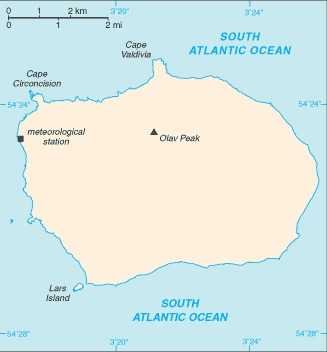
Bouvet IslandBouvet Island, an untouched jewel in the South Atlantic, invites the adventurous spirit to explore its captivating icy realms and extraordinary wildlife. This remote wonder, blanketed in glaciers and sculpted by volcanic history, unfolds like a page from a naturalist's dream, where each crack in the ice tells a story of resilience and beauty. Although uninhabited and cloaked in isolation, its rugged terrain is home to vibrant colonies of seabirds and seals, thriving against the odds. For the few who dare to tread its paths, Bouvet Island serves as a vivid reminder of nature's power and fragility, offering an unparalleled experience that transcends the ordinary and champions the importance of conservation in a world that often overlooks its wild heart.



Comprehensive Travel Guide to Bouvet Island
General Information
- Capital City: None (Uninhabited)
- Population: Uninhabited
- Currency: Norwegian Krone (NOK) (Applicable for visitors or expeditions under Norwegian jurisdiction)
- Time Zone: UTC+1 (Central European Time)
- Official Language: Norwegian (Administrative)
- Dialing Code: +47 (Norway’s dialing code)
- Driving Side: N/A (No roads or vehicles)
Bouvet Island, a remote dependency of Norway, is often called the most isolated island on Earth. Located in the South Atlantic Ocean, it is a volcanic island covered in glacial ice. It’s uninhabited, serving mainly as a site for scientific research and a haven for wildlife like seabirds and seals.
Language and Communication
- Official Language: Norwegian
- Communication: Satellite phones and radios are essential for any expedition.
As there is no permanent population, communication infrastructure is non-existent.
Emergency Information
- Nearest Emergency Services: Available via Norwegian authorities.
- Rescue Coordination: Norwegian Joint Rescue Coordination Centres handle emergencies related to Bouvet Island.
Due to its remoteness, emergency evacuations are highly complex and weather-dependent.
Currency and Money
- Currency: Norwegian Krone (NOK)
- Transactions: No commercial transactions occur on the island.
Bring all necessary resources, as there are no facilities for purchases.
Electricity and Plugs
- Electricity: None (Expeditions must bring their own power sources).
- Plugs: Norwegian-standard plugs (Type C and F) are applicable for any equipment brought from Norway.
Safety and Health
- Safety:
- Extreme weather conditions, including strong winds and sub-zero temperatures, dominate the environment.
- Volcanic terrain and icy surfaces pose additional risks for visitors.
- Health:
- Ensure a thorough health check and bring medical supplies.
- No medical facilities are available; emergency evacuations are the only option in case of serious issues.
Transportation
- Access:
- Accessible only by ship or helicopter, typically as part of scientific or exploratory missions.
- Weather conditions heavily influence access to the island.
- Internal Movement:
- Movement is on foot over icy, rugged terrain.
- Proper gear such as crampons, ice axes, and cold-weather clothing is essential.
Activities and Attractions
Nature and Wildlife
- Glacial Ice and Volcanic Landscape: Experience one of the most remote and untouched terrains on the planet.
- Wildlife Watching: Home to seals, penguins, and seabirds, including petrels and skuas.
Scientific Exploration
- Research on glaciology, volcanic activity, and marine ecosystems is conducted here.
Food and Cuisine
- Meals: All food and cooking equipment must be brought by visitors.
- Tips: Freeze-dried or long-lasting provisions are ideal for expeditions.
Shopping and Souvenirs
- No shopping opportunities exist.
- Collect memories, not materials, as the island’s protected status prohibits removing natural items.
Festivals and Events
- None (The island has no permanent or temporary settlements).
Suggested Itineraries
Scientific Expedition (7 Days)
- Day 1: Arrive via ship or helicopter; set up base camp.
- Days 2-6: Conduct research or exploration activities.
- Day 7: Depart, weather permitting.
Best Time to Visit
- Summer Months (December to February): Relatively milder temperatures and longer daylight hours make it the most feasible time for expeditions.
Connectivity
- Internet and Wi-Fi: Non-existent.
- Communication: Satellite phones or radios are required.
Conclusion
Bouvet Island is not a conventional travel destination but an extraordinary adventure for the most intrepid explorers and scientists. Its extreme isolation, breathtaking icy landscapes, and rich wildlife make it a fascinating yet challenging destination. A trip to Bouvet Island is less about tourism and more about appreciating the raw, untouched beauty of nature at its most remote.